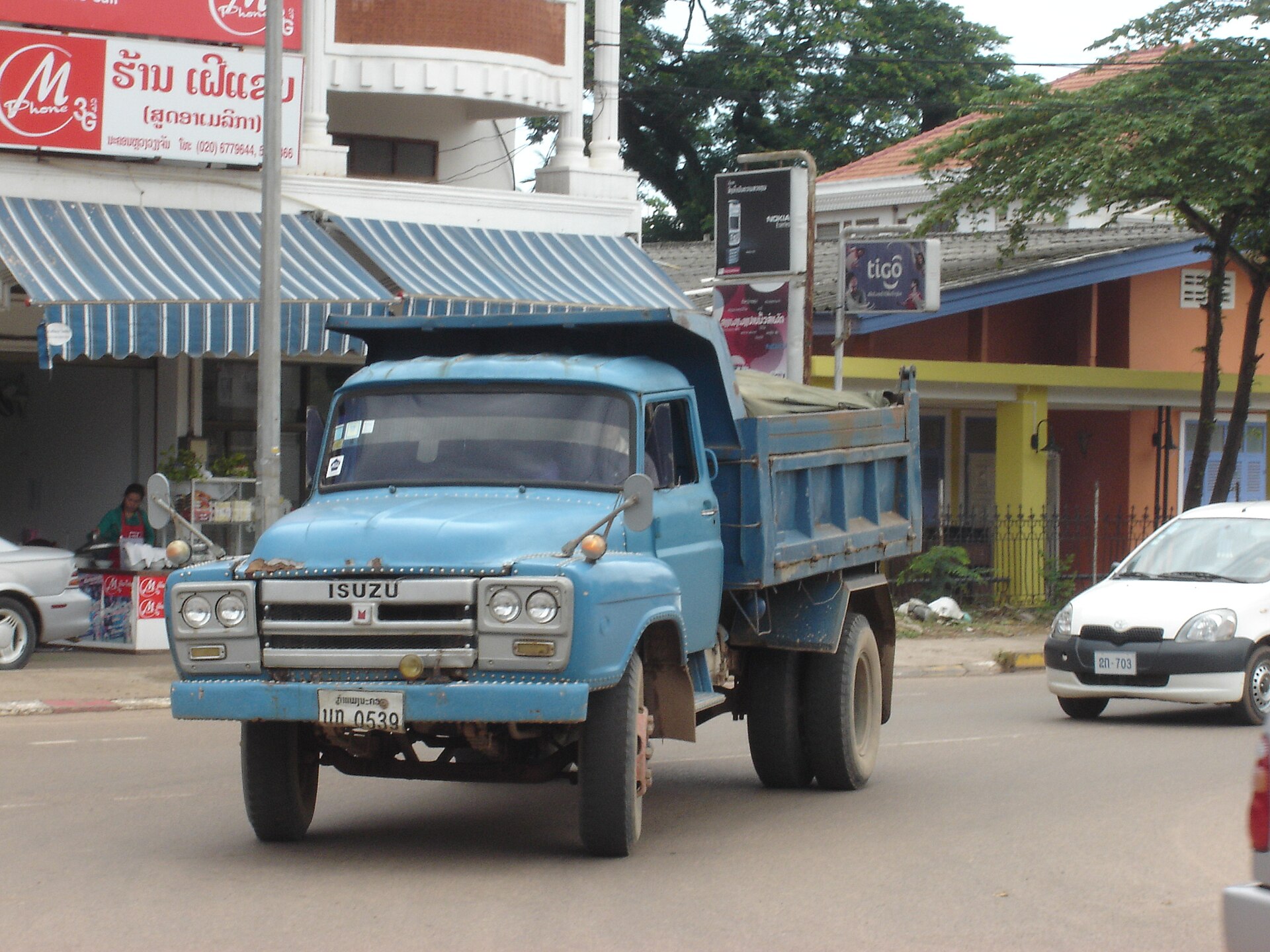
Since 1 June 2026, you legally cannot import a new petrol or diesel car into Laos. The government suspended it outright, for the rest of the year, as part of the same push toward electric vehicles we wrote about here. But most people in Laos aren't shopping for a brand-new car of any kind - they're buying and selling used ones, the way it's always worked here. So what does a freeze on new combustion cars actually mean if you already own a Corolla, or you're saving up to buy someone else's pickup truck?
Short version: every petrol and diesel car already in the country is now part of a fixed pool that can't be topped up until the freeze lifts. That changes the used-car market in real ways, whether you're selling or buying. Here's what to actually do about it.

Photo: nakhon100 / Wikimedia Commons (CC BY 2.0) - a street in Vientiane, where most car sales in Laos still happen the old way: word of mouth, a phone number on the windshield, or a classifieds listing.
What actually changed
The rule itself is narrow and worth stating precisely, because a lot of what circulates about it is not: new passenger petrol and diesel vehicles cannot be imported from 1 June through the end of 2026. Public transport vehicles, construction machinery, trucks tied to specific development projects, and specialised utility vehicles are exempt. Electric vehicles face no such restriction - if anything, they're getting cheaper to bring in, with zero import tariff and a roughly 3 percent excise tax against much higher rates for combustion vehicles.
This isn't unprecedented for Laos. In 2024, the government temporarily banned imports of expensive vehicles (large SUVs like the Land Cruiser) for similar economic reasons - it's a tool this government has reached for before when it wants to slow down foreign-currency spending on cars. And officially, this freeze is temporary: it's due to end 31 December 2026, though whether it gets extended hasn't been announced either way, and authorities have said they're working on support measures for importers who lose business from it.
None of that touches your used Hilux or your neighbour's Vios directly. What it touches is supply: no new gas or diesel cars are entering the country, so the used market is now the only market for anyone who wants a combustion vehicle rather than an EV, for as long as the freeze lasts.
If you're selling
Your car just became a slightly scarcer thing to own, at least for the rest of this year. That doesn't mean you should expect a windfall - Laos hasn't seen a documented used-car price spike as of this writing, and the government itself has flagged that it's watching prices and considering measures to prevent one. But basic supply and demand still applies: fewer new combustion cars competing for buyers' attention means your used one has one less thing pulling demand away from it.
A few practical implications:
- Well-maintained, mid-size vehicles are in the best position. Family sedans, compact SUVs, and pickup trucks - the workhorses most people actually shop for - are the segment most exposed to this shift, since these are exactly what would normally have been replaced by new imports.
- There's no urgency to panic-sell, but no reason to wait either. If you were already planning to sell, a tighter supply of alternatives works in your favour now more than it would have in May. If the freeze is extended into 2027, that dynamic likely continues; if it's lifted early, new imports come back and some of that scarcity value goes with them.
- Buyers will be more careful, not less, so a documented service history helps more than usual. In a market with fewer options, people don't buy blind - they compare harder. A car with maintenance records and a clean paper trail stands out.
- List where serious buyers actually look. A tighter market rewards visibility - listing your car on ul.la puts it in front of people actively searching, rather than relying on a sign in the windshield.
If you're buying
You have two real choices right now: buy a used petrol or diesel car, or go electric - new EV imports are unrestricted and increasingly common on Lao roads (see our guide to buying an electric car in Laos if you haven't ruled that out). If you've decided you specifically want or need a combustion vehicle - for a longer-range trip beyond the current charging network, for towing or hauling that suits a diesel pickup better, or just because that's what you can find in your price range - here's what's different about shopping for one during the freeze:
- Expect a smaller, more competitive pool. With no new petrol/diesel imports, the used inventory you're choosing from today is roughly what existed before 1 June, minus whatever's already sold. Popular, practical models may move faster than you're used to.
- Don't let a tighter market rush you into skipping the basics. Every general rule for buying a used car anywhere still applies here: see the car in person before paying anything, take it for a real test drive, and never send money to someone you haven't met based on photos alone. Scarcity is exactly the condition scammers rely on to create false urgency - "someone else is coming to look at it this afternoon" is a pressure tactic whether it's true or not.
- Check the annual technical inspection is current. Laos requires vehicles to pass a yearly roadworthiness inspection (new vehicles are exempt for their first two years), and the government has been tightening enforcement of vehicle safety standards through 2026. A car with a lapsed inspection isn't necessarily a bad car, but it's one more thing to budget for and verify before you commit.
- Compare against EV running costs before you finalize. Even if you're set on a combustion car, it's worth knowing that electricity in Laos runs roughly 10 to 15 times cheaper per kilometre than gasoline or diesel at current prices - a gap that's real regardless of the freeze. That doesn't make an EV the right choice for everyone, but it's a fair comparison to make with real numbers before signing.
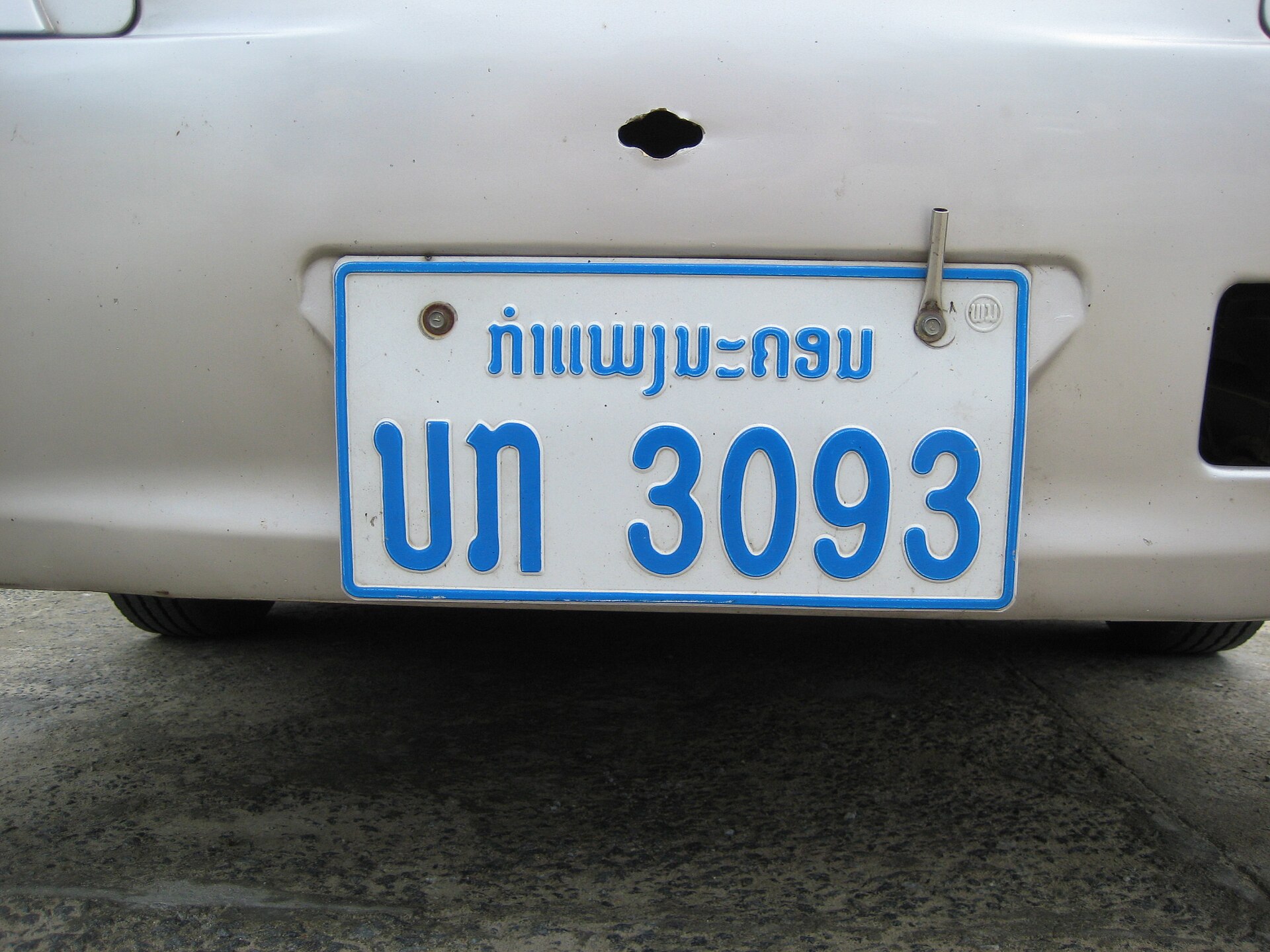
Photo: 19petra / Wikimedia Commons (CC BY-SA 4.0) - a standard Lao license plate. The plate follows the vehicle's registration, which is what actually needs to change hands when a car is sold.
The paperwork: how ownership actually changes hands in Laos
This part doesn't change because of the import freeze, but it matters more when the stakes of getting it wrong go up. Car ownership in Laos runs on a document commonly called the tabieng - the vehicle's registration book (sometimes called the "blue book" for its cover). Whoever's name is on it is the car's registered owner as far as the police and the registration office are concerned, freeze or no freeze.
When a used vehicle changes hands, the standard process is:
- A certificate of sale, typically certified through the seller's village head (naiban), documenting the transaction and both parties' identities. This is the document that protects you if anyone - police, a future buyer, the previous owner - ever questions the sale.
- Registering the transfer at the local vehicle registration office, to have the plates and registration book updated into the new owner's name.
- Confirming the technical inspection status, since a lapsed inspection needs to be renewed before (or shortly after) the car changes hands, depending on your province's practice.
If you're buying, the single most important check is simple: does the name on the ID matches the name on the tabieng, or is there a clear, documented chain showing how it got from the registered owner to the person standing in front of you? A car with a murky ownership trail is a bigger risk than almost anything else on this list, and it's the one thing a test drive won't reveal.
Staying safe on both sides of the deal
Most of this is universal used-vehicle advice, adapted to how it actually plays out here:
- Meet in person, in daylight, ideally somewhere public - not an isolated address you were only given the morning of.
- Never wire money, or hand over cash, before you've seen the car and its papers together. If a seller (or "seller") wants payment before you've verified the tabieng matches their ID, walk away.
- Get everything in writing, even a simple, dated, signed sale certificate with both parties' ID details - not just a verbal agreement and a handshake.
- Be extra sceptical of urgency in a market where scarcity is genuinely part of the news cycle right now. "Prices are about to jump, buy today" is a real dynamic in theory, but it's also the oldest pressure tactic in the book. A legitimate seller can wait a day for you to look the car over properly.
- When in doubt on price, compare listings, not gut feeling. Looking at what similar vehicles are actually asking on ul.la's vehicle listings gives you a real benchmark instead of relying on what one seller tells you the market "is like right now."
How long does this last?
Officially, through 31 December 2026. Unofficially, nobody outside the Ministry of Industry and Commerce knows for certain whether it gets extended, and Laos has shown before that it's willing to use temporary import restrictions as a policy lever when it suits the moment. If you're timing a purchase or a sale around when the freeze might lift, the honest answer is: plan for the date on the books, and don't assume it either extends or expires exactly on schedule.
A few common questions
Does the import freeze affect the value of my current car?
It shifts supply and demand in sellers' favour, in theory, since no new combustion cars are entering the country to compete for buyers. There's no confirmed data yet showing prices have actually moved because of it, and the government has said it's watching for that risk - so treat it as a real but unproven factor, not a guaranteed price bump.
Can I still buy a brand-new petrol or diesel car in Laos right now?
No, not through normal import channels, unless it falls under an exemption (public transport, machinery, certain project vehicles). New cars available to ordinary buyers right now are electric.
What documents do I need to legally buy a used car in Laos?
At minimum: the vehicle's registration book (tabieng) matching the seller's identity, a certificate of sale (typically village-certified), and then registering the ownership transfer at your local vehicle registration office.
Is it safer to just buy an EV instead?
It sidesteps the frozen-supply question entirely, since new EV imports are unrestricted. Whether it's the right choice depends on your actual driving needs - see our electric car buying guide for the honest pros, cons, and cost comparison.
Whether you're selling before the freeze potentially lifts or looking for the right used car right now, browse vehicles for sale on ul.la - a bigger, more current pool of listings than any single Facebook group or windshield sign.