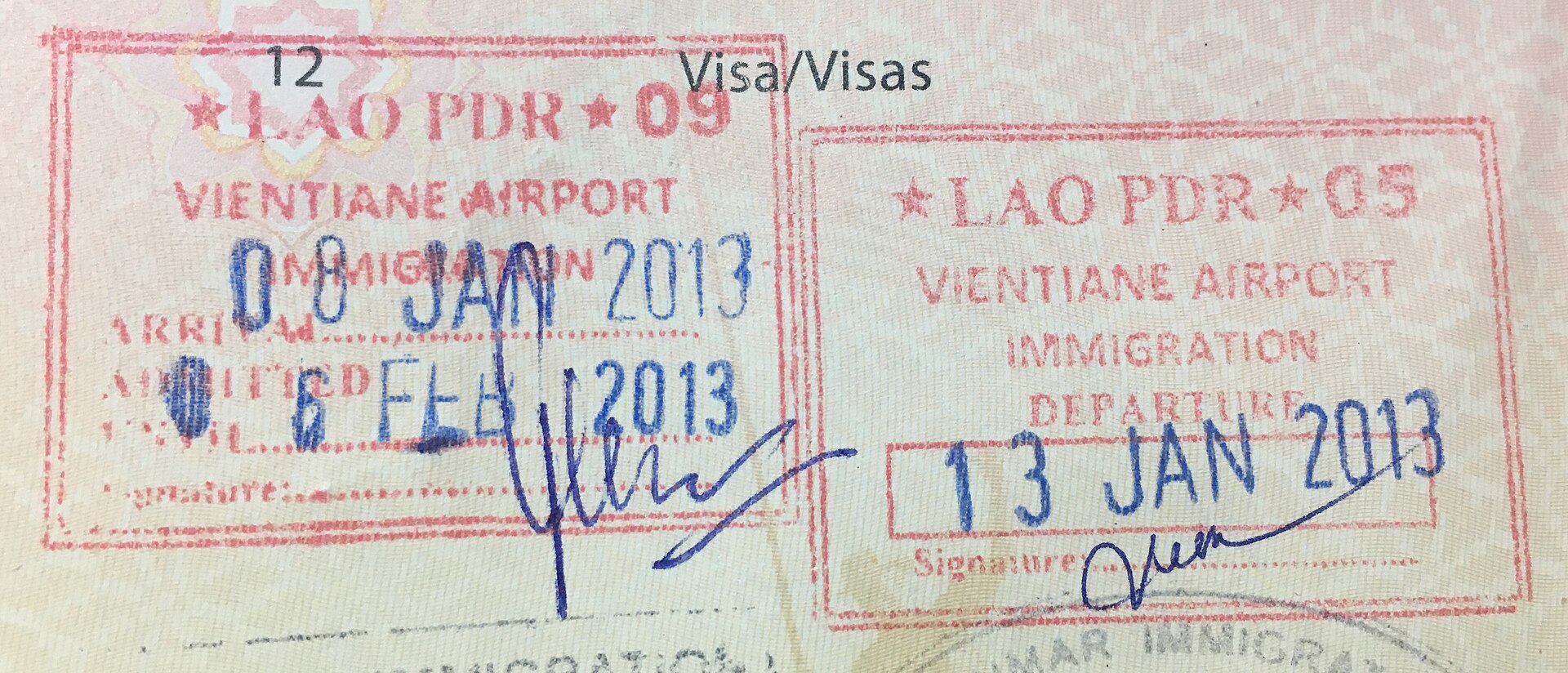
Laos doesn't have a digital nomad visa. It doesn't have a points-based skilled migration system, and there's no version of "just show up and figure it out" that's actually legal here. If you want to work in Laos as a foreigner, there's a specific process, a real quota system that shapes which jobs are realistically open to you, and a handful of sectors where foreigners genuinely do get hired, every year, through channels you can actually use. Here's how it works, without the vague "consult an immigration lawyer" hand-waving.

Photo: Slleong / Wikimedia Commons (CC0) - entry and exit stamps from Vientiane's Wattay International Airport. A tourist stamp like this is not a work authorization, however long your visa run lasts.
The three visas that actually matter
Laos issues three main visa categories tied to working legally:
- LA-B2 (Labor Visa) - the one most people need. For a foreigner working in Laos under a fixed employment contract with a Lao-registered employer. This is the standard route into an ordinary job.
- E-B2 (Expert Visa) - for people working with international organizations, UN agencies, or NGOs rather than a private company.
- NI-B2 (Investor Visa) - for foreigners who've invested in and are running their own registered enterprise in Laos, rather than working for someone else.
For almost everyone reading this, LA-B2 is the relevant one, and it comes with a rule that surprises a lot of people: you cannot switch from a tourist visa to LA-B2 while you're already in the country. The application has to be made from a Lao consular post in your country of residence, before you travel, backed by a sponsorship letter from your Lao employer. Arriving on a tourist visa and hoping to sort out a work visa once you've found a job locally simply doesn't work under the current process.
How the process actually runs
- You have a job offer first. A Lao-registered, licensed company has to sponsor you - this isn't something you can begin on your own initiative.
- The employer requests approval from the Ministry of Foreign Affairs in Vientiane to bring you on as a foreign worker.
- You apply for the LA-B2 visa at a Lao embassy or consulate abroad, using that approval and your employer's sponsorship letter.
- Once you arrive, your employer files for your Work Permit (issued by the Ministry of Labour and Social Welfare) and your Stay Permit (issued by the Immigration Department, Ministry of Public Security) - both within one month of the MFA authorization. Expect roughly 7 to 15 working days of processing once the paperwork is in.
- Your first contract runs 12 months, renewable in principle up to a maximum of 5 years total. The permit is tied to that specific employer and role - changing jobs means going through approval again, not just updating an address.
You'll also need: a passport valid at least six months out, a clean criminal record, a health certificate from a recognised Lao medical facility, and - practically speaking - to be over 20 with qualifications that actually match the position. That last part isn't a formality; it's the crux of the whole system.
The quota system, and why it decides which jobs you can realistically get
Lao law caps how much of a company's workforce can be foreign, and the caps are different depending on the type of work:
- Physical/manual labor roles: foreign workers can make up at most 15% of that category of the workforce.
- Specialised or intellectual roles: foreign workers can make up up to 25%.
The entire logic of the work permit system runs through this: an employer has to demonstrate that a foreign hire fills a genuine skills gap, not that they simply preferred a foreign candidate. In practice, that pushes real opportunities toward roles where local supply of qualified candidates is thinner - engineering, IT infrastructure and network security, finance and audit, legal, senior program and project management, and specialised technical trades. It does not favour general admin, entry-level retail, or hospitality-floor roles, where the local labour pool is deep and the quota math doesn't work in a foreign applicant's favour.

Photo: Masae / Wikimedia Commons (public domain) - Laos has one of the region's steadiest sources of foreign-hire demand: English language teaching, from village schools to private institutes and international schools in Vientiane.
Where foreigners actually get hired
Skilled and technical roles. This is the biggest real category, and it maps directly onto the 25% quota logic above. Mining and civil engineering, IT and network infrastructure, regional finance and accounting, legal advisory, and senior program management are the roles where a foreign candidate's specialised experience genuinely clears the bar. These postings show up on general job boards, not specialist "expat" sites - including, honestly, ul.la's own Jobs & Contracts category, which currently carries real listings for exactly this profile: mining and mechanical engineers, network security specialists, regional finance managers, legal advisers.
English teaching. The most accessible route for someone without a specific technical background. A TEFL or CELTA certificate is generally expected; a bachelor's degree isn't always required outside international schools, but it's strongly preferred and often necessary for the better-paid positions. Pay varies enormously by institution type: roughly $500-800/month at public schools, $700-1,000 at private language centres, and $2,300-3,500 at the handful of international schools in Vientiane. Almost all of this work is concentrated in the capital.
NGOs and international organisations. This is the E-B2 lane, not LA-B2, and it runs on a completely different hiring process - closer to how UN and INGO recruitment works globally than to a local job market. Laos has an active development and humanitarian sector (UNICEF, WWF-Laos, CARE International, Swisscontact, and others maintain a real presence), and the standard places to actually find these roles are UNjobnet, ReliefWeb, Impactpool, and UNCareer.net, not general classifieds.
Investing in your own business. The NI-B2 route, for people who'd rather build something than get hired into it. This is a meaningfully bigger commitment - registering an enterprise, meeting investment thresholds - and it's really its own separate topic, not a shortcut for someone who just wants a job.
What doesn't really exist: remote/digital nomad work. Laos has no digital nomad visa. People do work remotely for foreign employers while living here on tourist visas or short business visas, and enforcement in practice tends to focus on local employment rather than someone quietly doing a laptop job for a company abroad - but that's a description of common practice, not a legal green light. If you're planning to stay long-term specifically to work remotely, treat it as a genuine grey area, not a settled question.
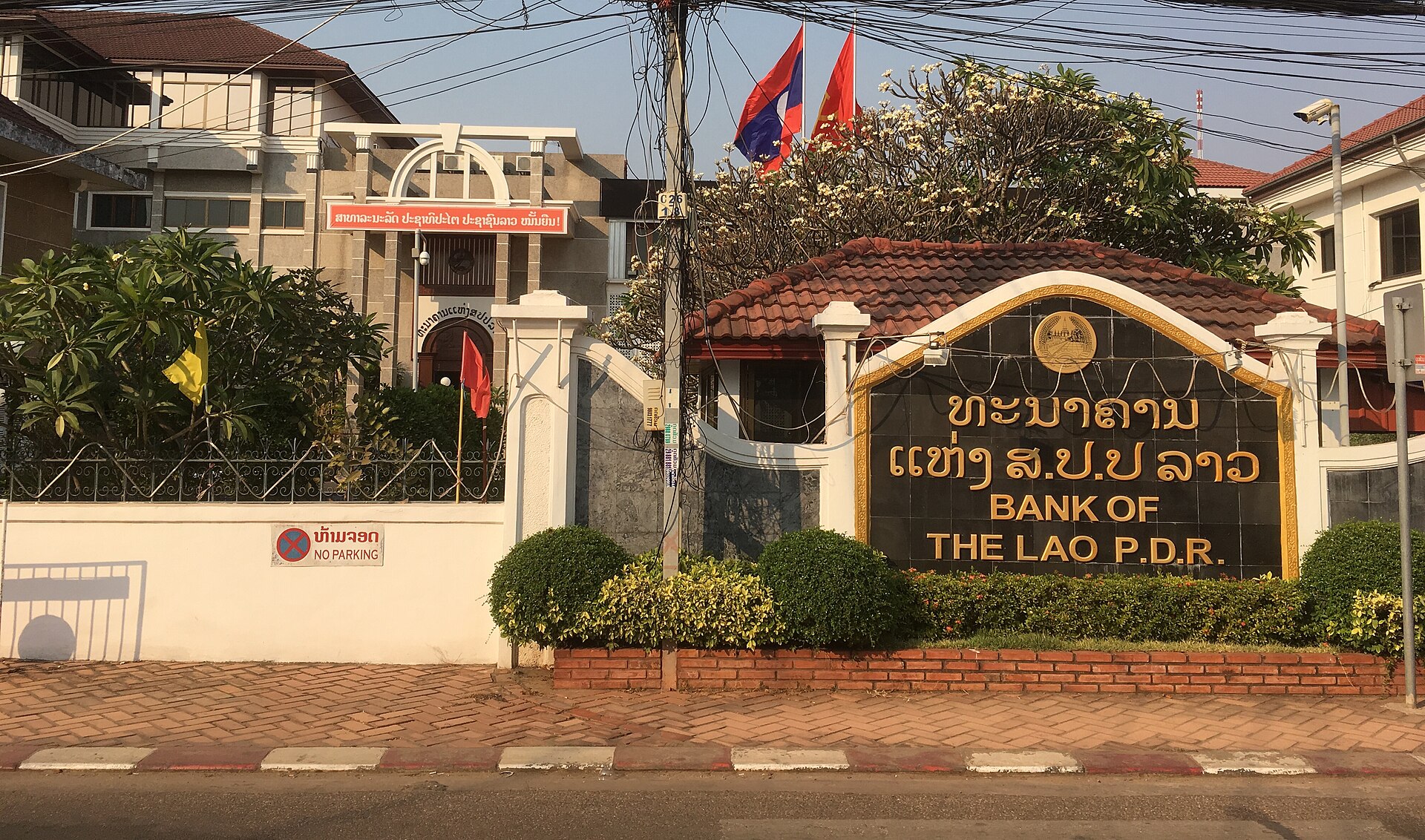
Photo: Spencer / Wikimedia Commons (CC BY 4.0) - central Vientiane, where most of the country's foreign-employer companies, banks, and professional firms are based.
What people get wrong
Assuming "renewable" means automatic. Both the work permit and the underlying contract extension process require fresh approval each time, not a rubber stamp. Budget the time and paperwork for it.
Assuming you can convert a tourist visa in-country. You generally can't, for LA-B2 specifically. If a job offer materialises while you're already in Laos on a tourist visa, expect to leave and apply from your home country or a nearby consulate, not to walk into an office locally and switch status.
Assuming any job qualifies. The quota system means employers face real friction sponsoring a foreigner for a role a Lao candidate could reasonably fill. The stronger your case is on genuine specialised skill or experience, the smoother this goes - and the more realistic your job search should be about which roles are actually open to you.
Treating remote work on a tourist visa as risk-free. It's common, but common isn't the same as compliant. Know the difference before you plan a year around it.
A few common questions
Can I just move to Laos and find a job once I'm there?
Not through the standard legal process for the main employment visa (LA-B2) - that has to be arranged from outside the country, backed by a confirmed job offer and employer sponsorship, before you travel. NGO and investor routes work somewhat differently, but none of the three main visas are designed around "arrive first, sort it out later."
What's the fastest, most realistic way for a foreigner to get legally hired in Laos?
English teaching has the lowest barrier to entry (TEFL certification, no specific technical background required). For higher-paying, longer-term roles, specialised technical and professional positions - engineering, IT, finance, legal - are where the quota system actually works in a foreign applicant's favour.
Do I need a job offer before applying for a work visa?
Yes, for LA-B2. Employer sponsorship and Ministry of Foreign Affairs approval come before the visa application, which comes before you enter the country to start work.
Is working remotely for a foreign company while living in Laos legal?
There's no dedicated legal pathway for it, and no digital nomad visa. It happens widely and enforcement tends to focus elsewhere, but that's not the same as it being clearly sanctioned - treat any long-term plan around it as carrying real legal uncertainty.
Looking for a role that fits the profile employers can actually sponsor? Browse current job listings on ul.la, including the engineering, IT, finance, and legal roles that make up most of the real foreign-hire market in Laos.