If you're looking at apartments in Vientiane, the first thing worth knowing is that there's no MLS-style listing service, no standardized lease template, and no government rent index to check a price against. What you have instead is a patchwork of agents, Facebook groups, and word of mouth - which means the actual rental market runs on local knowledge that isn't written down anywhere obvious. This is that knowledge, written down.
What rent actually costs
Prices in Vientiane vary enormously by condition and location, more than by strict square footage. As a rough guide:
- $200-300/month: older, basic apartments - functional but dated, often with minimal furnishing.
- $400-600/month: standard modern apartments - a reasonable one-bedroom in a decent building.
- $700-1,000/month: new, spacious, well-finished units - the range most incoming expats end up in.
- $1,000-2,000+/month: larger 3-4 bedroom houses, or serviced apartments with a pool and gym.
Houses generally run a bit higher than apartments of comparable size, since they come with land. Budget units well outside the city center can drop under $200/month, but you're trading distance for price - factor in your actual commute before deciding that's a deal.
These numbers move around with the exchange rate, too. The kip has weakened substantially against the dollar over the past few years, and landlords who quote in kip versus dollars can end up meaning very different things month to month - always confirm which currency a quoted price is actually in.
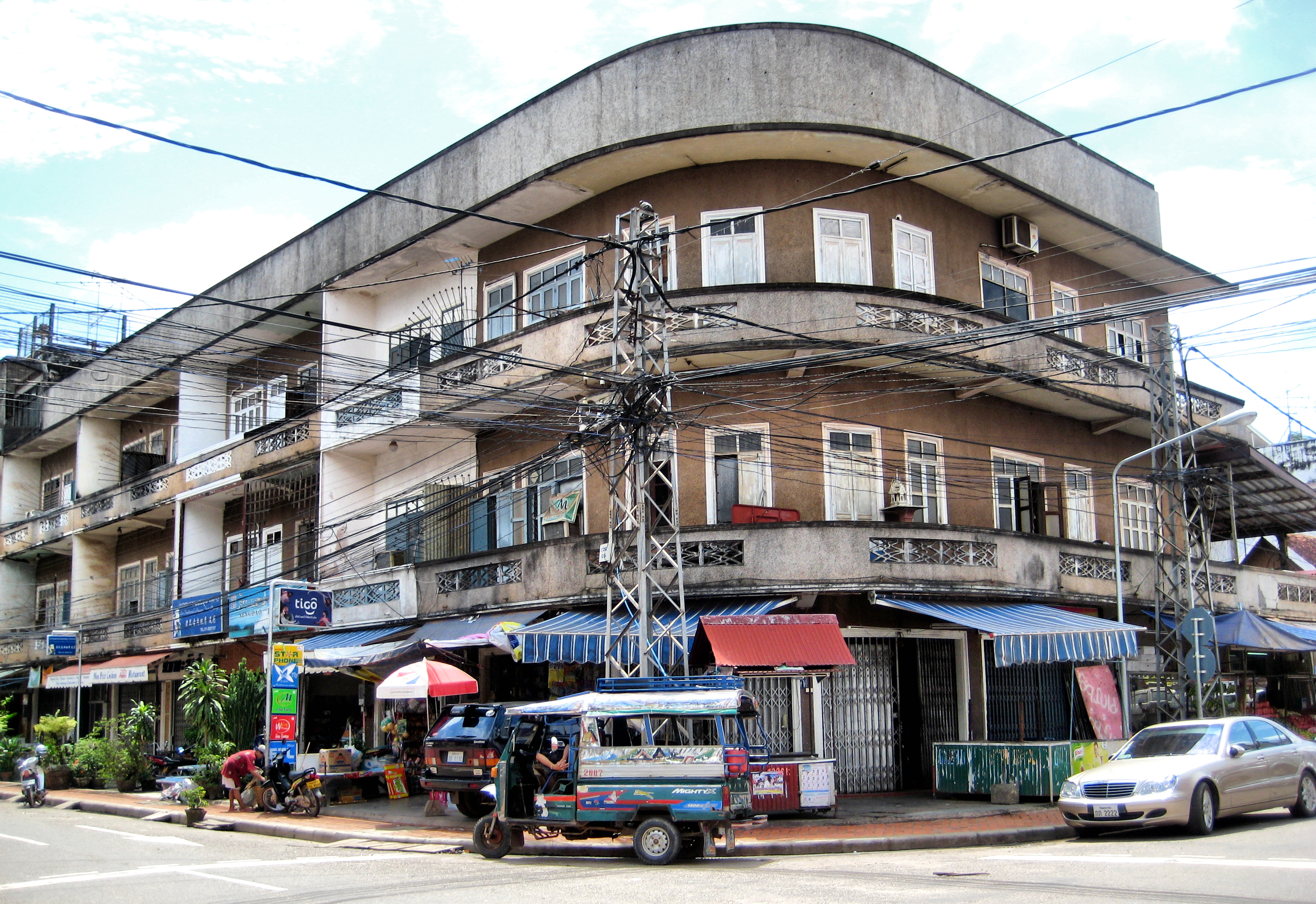
Photo: Francisco Anzola / Wikimedia Commons (CC BY 2.0) - an apartment building in central Vientiane, the kind of mid-rise stock that makes up most of the city's rental market.
How the deposit and lease actually work
This is the part that surprises people coming from a Western rental market the most: Vientiane doesn't really have a security-deposit culture in the way you might expect. Where a deposit is collected at all, it's typically closer to a holding fee to take the unit off the market than a refundable bond - and it isn't always treated as refundable if you change your mind.
What Vientiane landlords do commonly ask for is rent paid well in advance. For houses in particular, a full year's rent upfront in cash is a normal ask, though this is negotiable down to six months in many cases. Apartments are more likely to accept monthly payment, especially in buildings used to renting to expats.
Leases are typically written for a minimum of 12 months. Get it in writing, and if you're not comfortable reading a Lao-language contract, ask for a bilingual version or have someone review it before you sign - this isn't a formality most agents will offer proactively. There's no requirement for a Lao co-signer or guarantor that we could find documented anywhere; what you'll need instead is your passport and proof of your visa or work permit status.
One genuinely useful step, if you want your lease to carry real legal weight: contracts can be stamped or registered with the local village or district authority. It's not mandatory, but it gives you something to point to if a dispute ever comes up.
What you're actually renting, versus what a foreigner can buy
Renting sidesteps a question that trips up a lot of newcomers looking at buying instead: foreigners can't own land in Laos, full stop - not even Lao citizens hold outright freehold title, only long-term use rights. That restriction doesn't apply to renting. As a tenant, you can sign a lease on almost anything on the market with no special legal barrier. It's only if you later decide you want to buy that the much narrower rules around condominium ownership, land leases, and company structures come into play.
Utilities: expect a separate bill for everything
Rent in Vientiane is almost never "all-inclusive." Electricity, water, internet, and garbage collection are typically billed separately from rent, paid directly by the tenant.
Electricity is worth budgeting carefully for, especially if you're running air conditioning through the hot season. EDL, the state electricity utility, has raised tariffs more than once in recent years, and pricing has been a genuinely contentious political topic - the government renegotiated hydropower supply deals in 2025 partly in response to public pushback over high electricity costs. Don't assume last year's bill estimate still holds.
Internet pricing is inconsistent enough between providers and plans that it's hard to give one number - budget somewhere in the $10-50/month range depending on speed and provider, and ask your specific building or landlord what's actually available, since not every building has fiber.
Where people actually rent
Sisattanak and Chanthabouly are the two districts that come up again and again as the center of expat rental demand, and for consistent reasons: they're close to the main embassies, to the international organizations and NGOs that employ a lot of the expat population, and to the international schools - Vientiane International School, Panyathip International School, and Kiettisack International School are all clustered within a few kilometers of each other in this part of the city. These areas also tend to have the most reliable electricity and internet infrastructure, which matters more than it sounds like it should.
The Mekong riverside gets a lot of attention for its restaurants and evening atmosphere, and higher floors with river views or a pool command a real premium - but most of what's advertised there skews toward short-term/serviced stays rather than the standard 12-month lease market, so treat riverside listings as a different category from a typical long-term rental search.
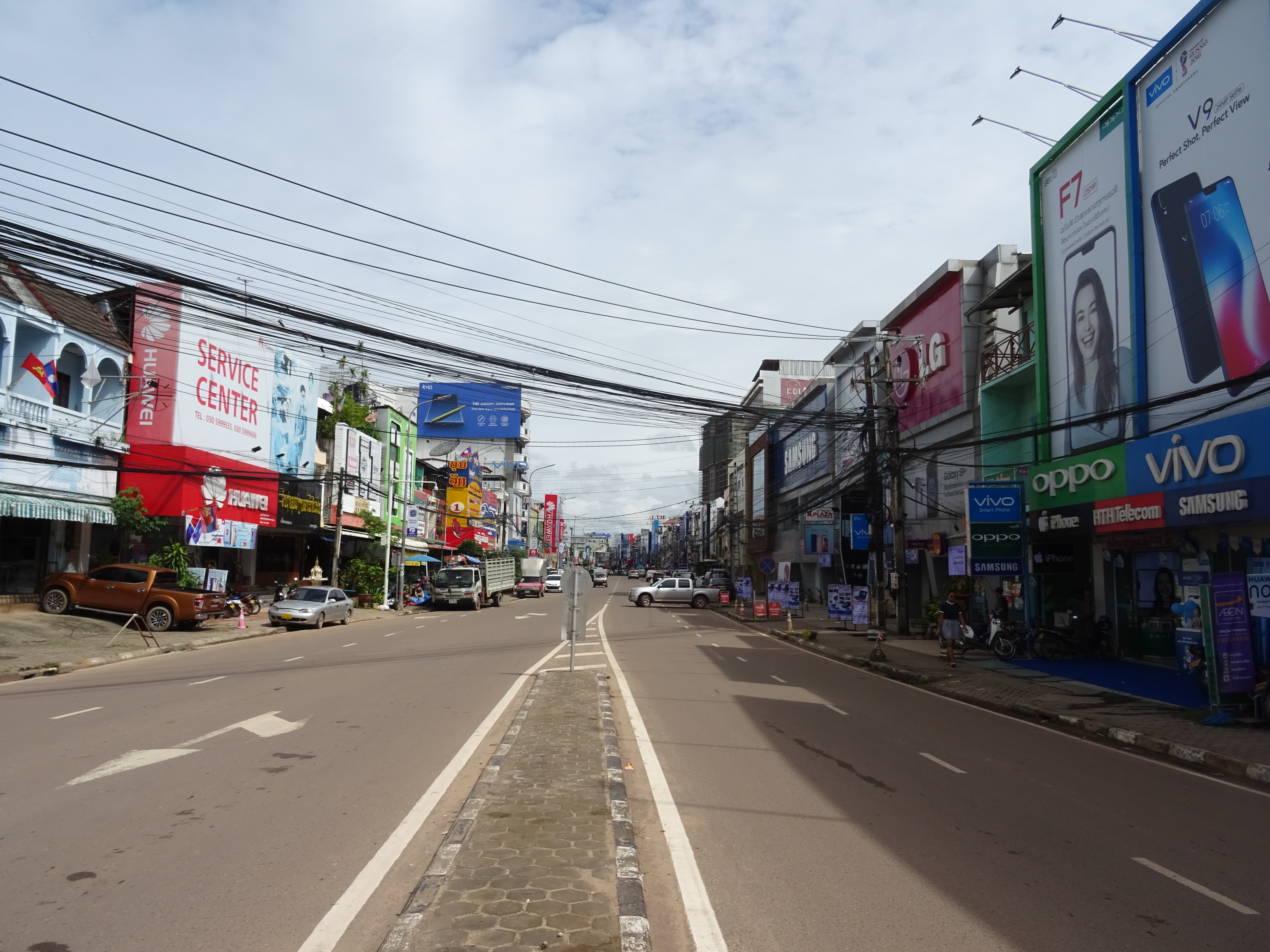
Photo: Christophe95 / Wikimedia Commons (CC BY-SA 4.0) - a quieter residential street away from the main commercial roads, the kind of location that trades convenience for calm.
Common pitfalls to watch for
- Prices that move once a foreigner is asking. It's a widely reported pattern locally that quoted rent can shift based on who's asking, not just what the unit is worth. Get a sense of the going rate from more than one source before committing.
- A "better offer" bumping your reservation. Because holding deposits aren't always treated as binding, a landlord can in principle accept a higher offer from someone else even after you've put money down. Move quickly once you've decided, and get written confirmation, not just a verbal handshake.
- A second, understated contract. Some landlords propose keeping the official lease value lower than what you're actually paying, generally for tax reasons on their end. It's a known local practice - decide for yourself whether you're comfortable with it, but understand what you're signing.
- No renter's insurance culture. Most landlords carry no building insurance, and it won't cover your belongings even if they did. If you want your possessions protected, that's on you to arrange separately.
- Limited privacy expectations. Don't be surprised if a landlord drops by for an inspection without much notice - it's a more common practice here than in many Western rental markets.
A short checklist before you sign
- Confirm the currency and total. Get the monthly rent, deposit/advance amount, and payment schedule in writing, in the currency you both agree on.
- Walk the unit at the time of day you'd actually use it, not just during a scheduled viewing - check water pressure, note existing damage, and photograph the condition before you move anything in.
- Ask specifically about internet and electricity setup rather than assuming it's already sorted - confirm what provider is available and whether the meter is in your name or the landlord's.
- Get the lease term, renewal process, and any early-termination terms spelled out, not left as an assumed understanding.
- If anything about the deal feels rushed, that's usually a sign to slow down, not a sign to move faster to secure it.
The honest bottom line
Vientiane's rental market rewards people who do a bit of homework before they start looking, because there's no single trustworthy price list to lean on - you're building your own picture from listings, agents, and asking around. Sisattanak and Chanthabouly remain the safest starting point for most newcomers, both for infrastructure and for the practical reason that a lot of other expats have already worked out the kinks there. Wherever you land, get the lease terms in writing, budget separately for utilities, and don't assume a verbal agreement holds the way it would back home.
A few common questions
Do I need a Lao guarantor to rent an apartment in Vientiane?
No - there's no documented requirement for a local co-signer. What landlords typically ask for instead is your passport and proof of your visa or work-permit status, plus rent paid further in advance than you might be used to.
Is a security deposit refundable in Vientiane?
Not reliably. Deposits function more like a holding fee to reserve a unit than a Western-style refundable bond, and they're often treated as non-refundable if you back out. Get the terms in writing before you pay anything.
Are utilities included in the rent?
Almost never. Electricity, water, internet, and garbage are typically billed separately and paid directly by the tenant, so factor them into your real monthly budget on top of the quoted rent.
Which areas of Vientiane are best for renting as a foreigner?
Sisattanak and Chanthabouly are the most consistently recommended districts, mainly because of their proximity to embassies, NGOs, and the main international schools, plus generally more reliable electricity and internet than some other parts of the city.
Looking for an apartment in Vientiane, or have one to list? Browse real estate for rent on ul.la - houses, apartments, and rooms from across Laos.