Laos is a small country, but its three best-known cities feel like they belong to different economies entirely. Vientiane is the seat of government, banking, and the international-organization crowd. Luang Prabang is a UNESCO World Heritage town whose entire economy runs on tourism. Pakse is a river-trade and agriculture hub in the south, closer in spirit to a large regional town than a city. That difference shows up directly in what things cost - here's the real comparison, with the gaps in the data flagged honestly where they exist.
The short version
Cost-of-living data for Laos gets thinner the further you get from the capital. Vientiane has reasonably active, current crowd-sourced pricing data. Luang Prabang's is thin - a handful of data points, not a real sample. Pakse's is close to nonexistent in the usual cost-of-living trackers, so anything below for Pakse leans more on general estimates than hard numbers - we've flagged it that way rather than presenting a false level of precision.
With that caveat up front, the general ordering is consistent across the sources that do make a direct comparison: Vientiane is the most expensive city in Laos, Pakse is the most affordable, and Luang Prabang sits in between as a citywide average - with one important twist explained below.
Housing
A one-bedroom apartment in central Vientiane runs roughly $270-640/month depending on the source and the specific building, with outside-the-center units cheaper. A comparable one-bedroom in Luang Prabang can look similar on paper, or even higher, but that's driven almost entirely by the UNESCO-listed Old Town core, where tourist-driven demand pushes prices up - move a short distance outside that core and riverside apartments in the $200-400/month range are more typical. Pakse rent estimates cluster lower still, roughly $80-330/month, though this figure carries the least confidence of the three.
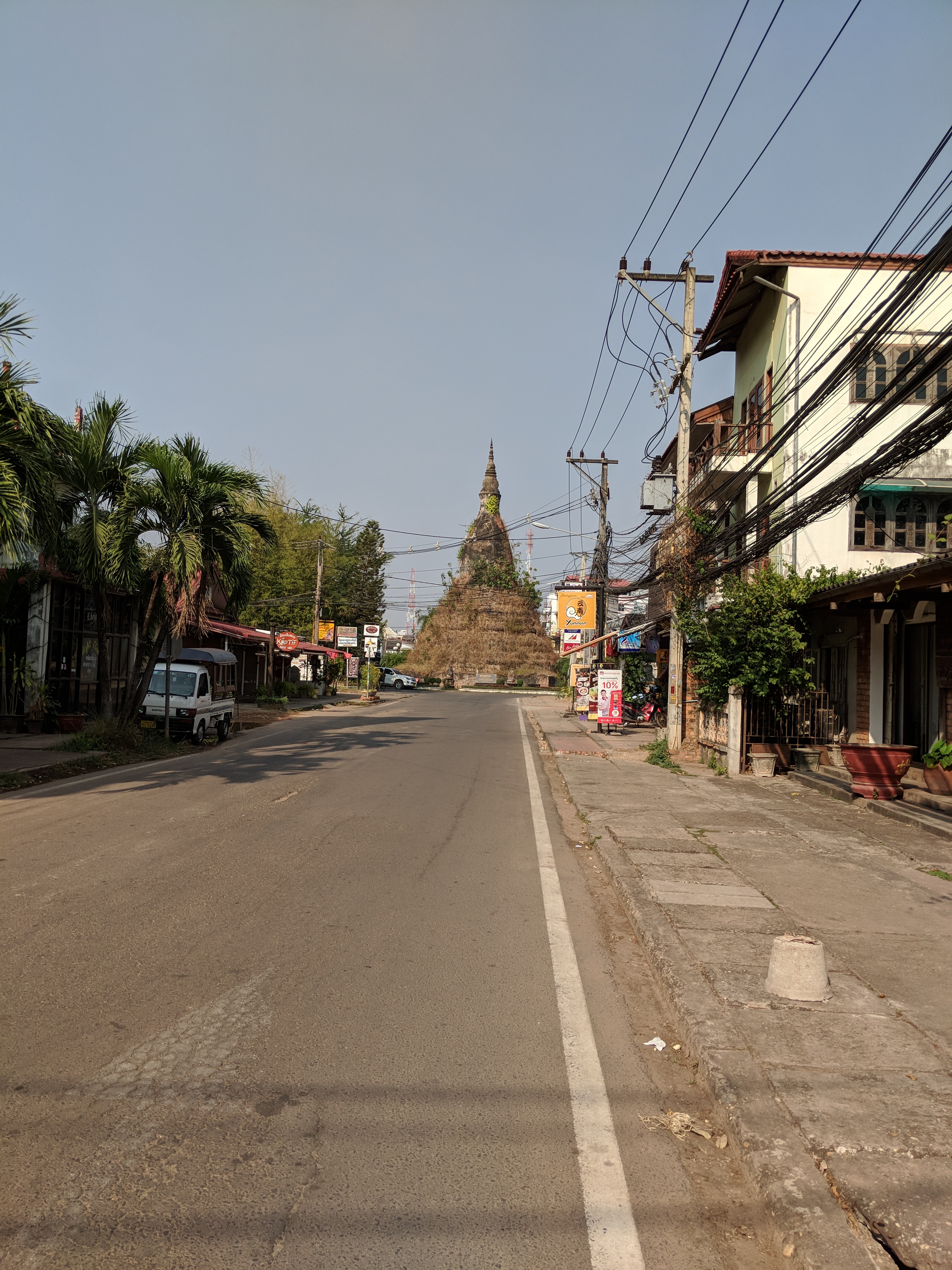
Photo: Ryuch / Wikimedia Commons (CC BY-SA 4.0) - Avenue Lane Xang in Vientiane, looking toward the Patuxai monument. As the capital, Vientiane carries the country's highest cost of living by a clear margin.
The honest takeaway on Luang Prabang specifically: a single "average rent" figure for the city is somewhat misleading, since it blends a genuinely expensive tourist core with meaningfully cheaper surrounding areas. If you're planning to live there rather than visit, ask specifically about a neighborhood's distance from the Old Town before you compare it to a Vientiane price.
Food
In Vientiane, an inexpensive local meal runs around $2-3, with a mid-range restaurant meal for two closer to $18. Luang Prabang's food-price data is thin, but what exists tracks close to Vientiane's numbers - unsurprising, given how much of the local restaurant scene there is priced for tourists rather than for the local cost of living. Pakse doesn't have reliable structured pricing data, but multiple lower-authority sources describe very cheap local dining, often under a dollar for a basic meal - treat that as a general directional estimate rather than a verified figure.
Getting around
Fuel prices don't vary meaningfully by city - Laos prices gasoline nationally, and it's risen steadily through 2026. Where the cities genuinely differ is in transport character and cost of local mobility: Vientiane is spread out and largely car-and-motorbike-dependent for daily errands, with motorbike rental running roughly $5-9/day locally. Luang Prabang's Old Town is compact and walkable, with motorbikes mainly useful for day trips out of town - rental there runs noticeably higher, roughly $9-23/day, reflecting tourist-market pricing rather than a local daily-use rate. Pakse is smaller and motorbike-centric, with no meaningful public transit system, similar in character to Luang Prabang but without the tourist pricing.
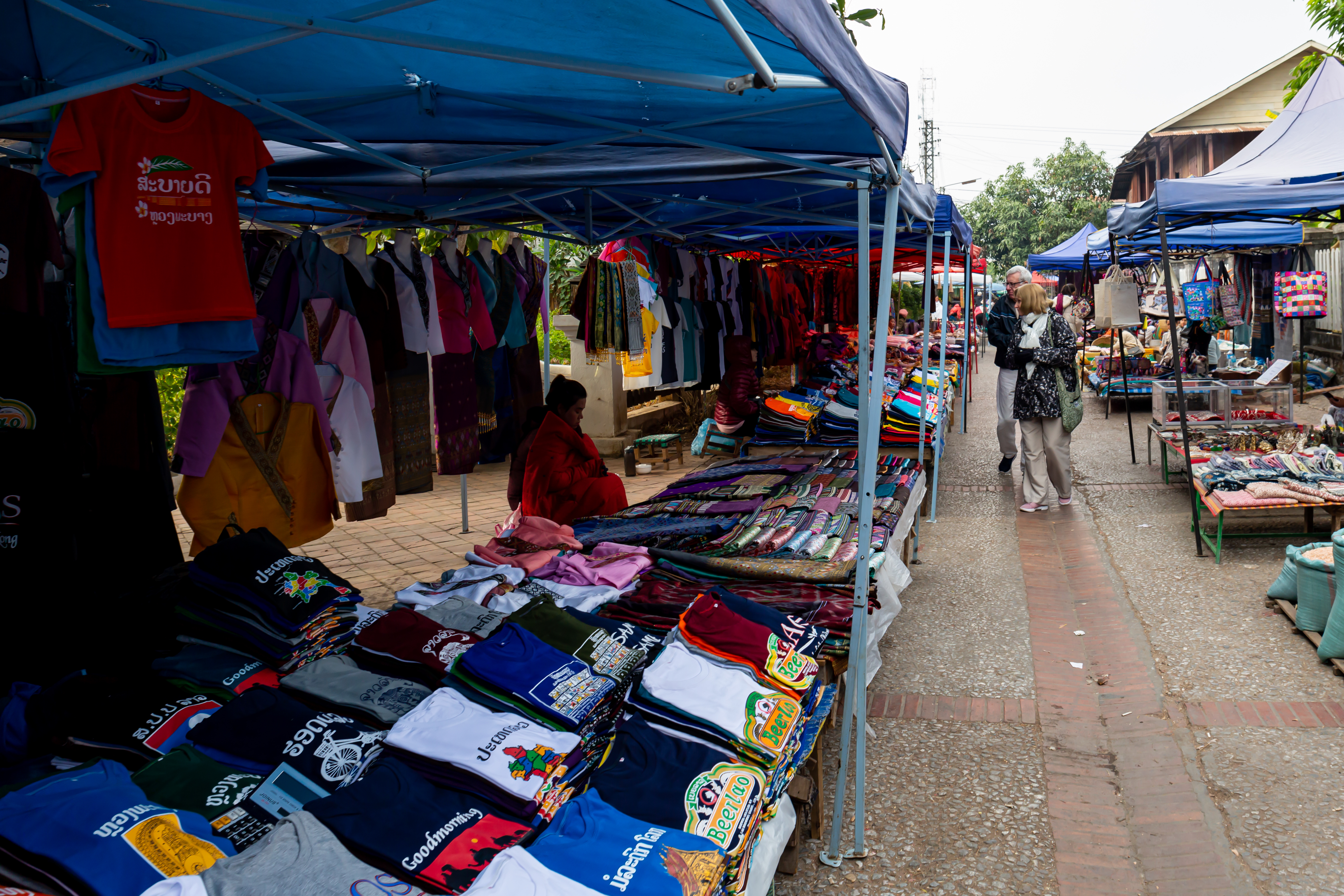
Photo: Balon Greyjoy / Wikimedia Commons (public domain) - a market in Luang Prabang. The town's UNESCO-listed Old Town drives up prices in a way that doesn't reflect the surrounding area.
What kind of work is actually there
This is where the three cities diverge most clearly, and where the data is most solid. Vientiane is unambiguously the country's economic center - it hosts the government ministries, the country's banking and corporate sector, and the bulk of the UN agencies and international NGOs operating in Laos (WWF-Laos, the AIDS Healthcare Foundation, and similar organizations among them). If you're looking for a corporate, government-adjacent, or international-organization job in Laos, this is almost certainly where it is.
Luang Prabang's economy runs overwhelmingly on tourism - hotels, guesthouses, restaurants, tour operators, and handicrafts, a direct result of its 1995 UNESCO World Heritage listing. Work here tends to track the tourism season and skews toward hospitality rather than corporate or government roles.
Pakse functions as a trade and agricultural hub - Mekong river commerce, cross-border trade with Thailand, and proximity to the Bolaven Plateau's coffee and tea-growing region shape its economy far more than tourism or government administration do.
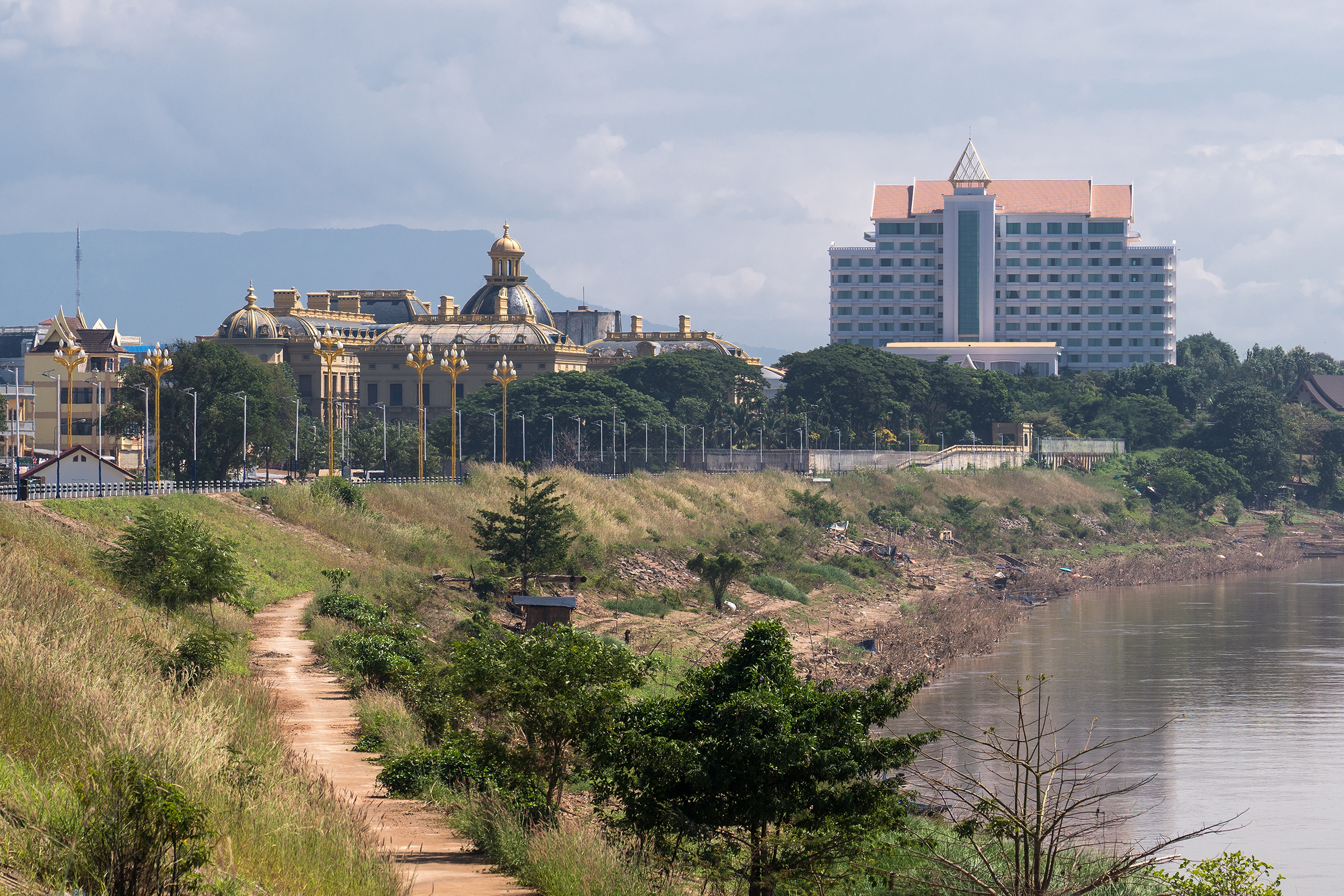
Photo: Alexkom000 / Wikimedia Commons (CC BY 4.0) - a street in Pakse, the country's southern trade and agricultural hub, smaller in scale than either Vientiane or Luang Prabang.
Scale: how big is each city, really
Vientiane Prefecture is home to roughly 800,000 people, making it by far the largest of the three - genuinely a small capital city, with the infrastructure and sprawl that implies. Luang Prabang and Pakse are both far smaller, with population estimates in the range of 55,000-125,000 depending on exactly how the city boundary is drawn in a given source - broadly comparable to each other in scale, and an order of magnitude smaller than Vientiane. If Vientiane feels like a real, if modest, capital city, Luang Prabang and Pakse both feel more like large regional towns - just with very different economies underneath them.
The honest bottom line
If cost is your main concern and you have location flexibility, Pakse is the cheapest of the three by most estimates, though it's also the one where you should trust the specific numbers least - verify locally rather than budgeting off a web search alone. Luang Prabang is genuinely not a budget option if you want to live inside or near the Old Town, despite being a much smaller town than Vientiane - its tourism economy prices the center like a destination, not like a small regional city. Vientiane costs the most overall, but it's also where almost all of the country's higher-paying jobs actually are, which is a real tradeoff worth weighing rather than looking at cost of living in isolation.
A few common questions
Which city in Laos is the cheapest to live in?
Pakse, by most available estimates - though it's also the city with the least reliable cost-of-living data, so treat specific figures as rough guidance rather than verified numbers.
Is Luang Prabang cheaper than Vientiane?
Not necessarily. As a citywide average it often comes in slightly below Vientiane, but housing and dining inside the UNESCO-listed Old Town can actually run higher than equivalent options in the capital, since pricing there reflects tourist demand rather than local cost of living.
Where are most jobs in Laos located?
Vientiane, by a wide margin - it's the seat of government, the center of banking and corporate business, and home to most of the UN agencies and international NGOs operating in the country.
Do fuel prices differ between Vientiane, Luang Prabang, and Pakse?
Not meaningfully - fuel is priced nationally in Laos rather than city by city, so gasoline costs about the same wherever you are.
Thinking about where to live or work in Laos? Browse real estate and job listings on ul.la, across Vientiane, Luang Prabang, Pakse, and beyond.