If you're moving to Laos with a dog or cat, the process is well-documented and, honestly, not that different from importing a pet into most Southeast Asian countries. If you're moving with anything else - a rabbit, in particular - the process most people find online simply doesn't apply, and finding that out after you've already booked flights is a genuinely bad time to learn it. Here's both versions: the standard dog-and-cat process, and what actually happens when your pet doesn't fit that mould.
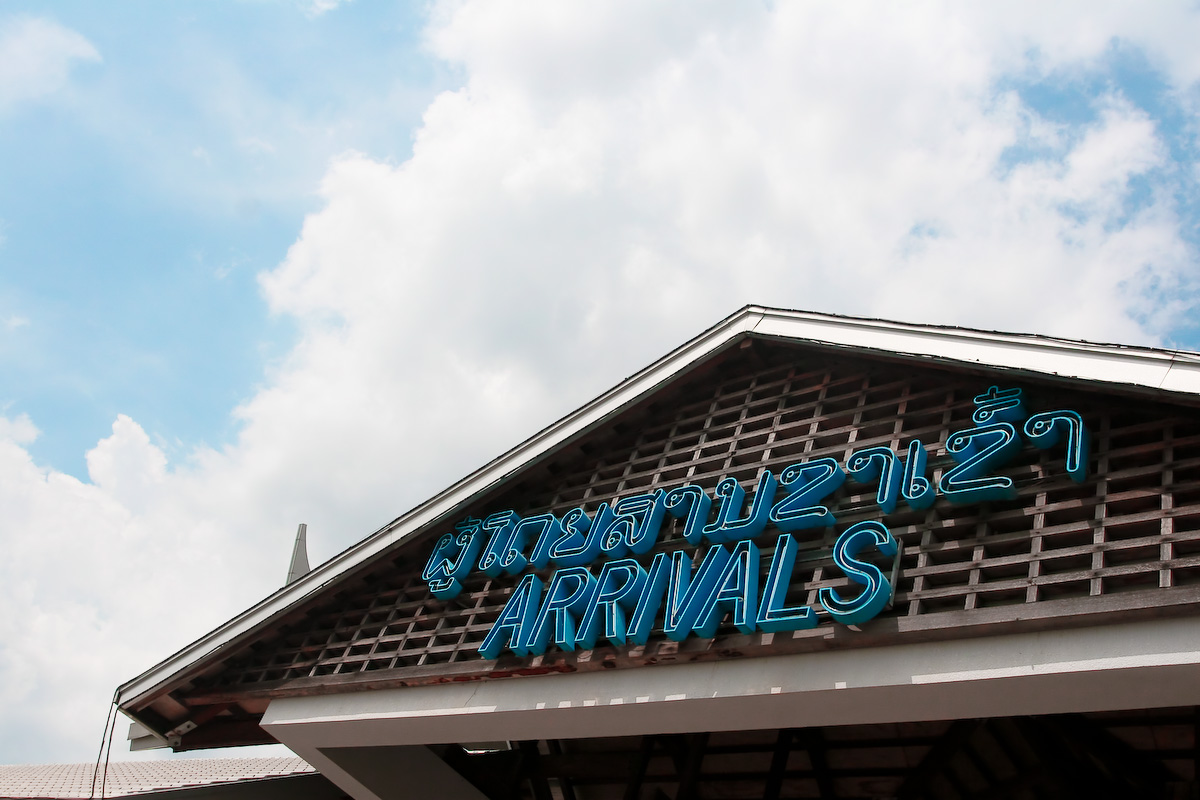
Photo: Tim Wang / Wikimedia Commons (CC BY-SA 2.0) - Wattay International Airport, Vientiane, where pets legally enter Laos by air.
The standard process: dogs and cats
Laos doesn't impose quarantine on a pet that arrives with its paperwork in order - a genuine advantage over several neighbouring countries. The catch is that "in order" is specific and non-negotiable. Here's what you need:
- Microchip (ISO standard) implanted before any of the other steps
- Rabies vaccination, administered more than 30 days but less than 12 months before travel
- Full vaccination record, current and complete
- Veterinary health certificate, issued shortly before departure confirming your pet shows no signs of contagious disease
- Import Permit from Laos's Department of Livestock and Fisheries (DLF), under the Ministry of Agriculture and Forestry - processing typically takes 7-10 working days, and the legal basis is Decision No. 0795/MAF (18 April 2019) on the Import, Export and Transit of Animals and Animal Products
- Supporting paperwork: your passport copy, a letter from your employer or sponsor if applicable, your pet's photo and description, and flight arrival details
Start this at least 4-6 months out, not 4-6 weeks. Between the vaccination timing windows, permit processing, and the fact that enforcement and requirements can be applied inconsistently between officials, building in slack is what actually saves you from a bad day at the airport. And take the warning seriously: a pet that shows up without proper documentation faces quarantine (if space is available), being sent back to its country of origin, or - in the worst case - euthanasia. That's not a scare tactic, it's the stated policy, and it's exactly why the paperwork matters more than almost anything else about the move.
Getting there: as of 2026, Vientiane's Wattay International Airport is served by a genuinely wide set of carriers, including Lao Airlines, Thai Airways, Vietnam Airlines, China Eastern, China Southern, and AirAsia - more routing options than a few years ago, though not every airline on that list necessarily carries live animals on every route. Confirm directly with the specific airline before booking, and use an IATA-compliant travel crate - crates bought from local markets are routinely rejected at check-in.
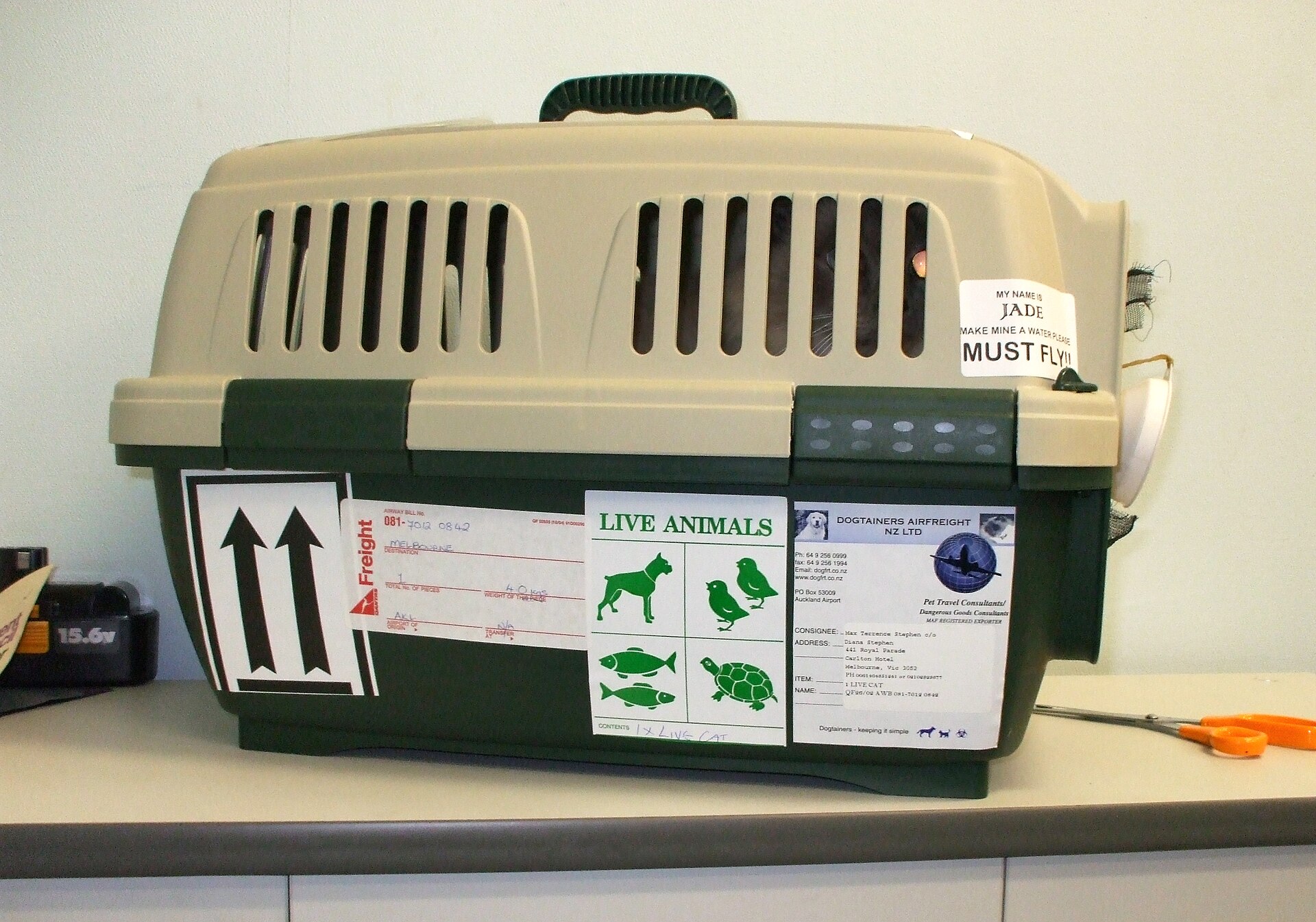
Photo: Chachacha369 / Wikimedia Commons (CC BY-SA 3.0) - an IATA-style live animal freight crate. This is the level of documentation and labelling airlines actually require, well beyond a normal checked-bag tag.
Where a lot of people get caught out: your pet isn't legally a "pet"
Airlines classify which species travel under their standard pet policy, and that classification is narrower than most owners assume. Dogs and cats, generally yes. Rabbits, in particular, are a real problem: most airlines don't accept them in the cabin at all, and a meaningful number won't carry them through their standard checked-pet program either, because they're categorised as an exotic animal rather than a conventional pet. When that happens, your only real option is air cargo freight - a genuinely different process from checking a pet as excess baggage, involving a proper airway bill, freight-specific documentation, and often an entirely different customer service channel than the one you'd use to book a pet in the cabin.
A real example, based on one owner's actual experience shipping a rabbit from the United States to Laos: because a direct pet-cargo route into Laos wasn't available, the move happened in two legs. The rabbit flew as air cargo from the US to Bangkok (BKK), then completed the final leg from Bangkok to Laos by road. That first leg required its own import permit - not from Laos, but from Thailand's Department of Livestock Development, because Thailand's import framework treats rabbits under its livestock-import rules rather than its companion-animal pet policy. Required health measures for that leg included rabies vaccination, RHD (Rabbit Haemorrhagic Disease) vaccination, and deworming treatment - a different vaccine profile entirely from what a dog or cat needs.
The lesson generalises beyond rabbits: if your pet is anything other than a dog or cat - a rabbit, a bird, a reptile, any small mammal - don't assume the standard "pet travel" pipeline applies. Check the airline's exotic-animal and cargo policy specifically, check whether your routing passes through a country (like Thailand) with its own agricultural import permit requirement for that species, and expect road transport for at least part of the journey to be a realistic, sometimes necessary, part of the plan rather than a downgrade from flying the whole way.
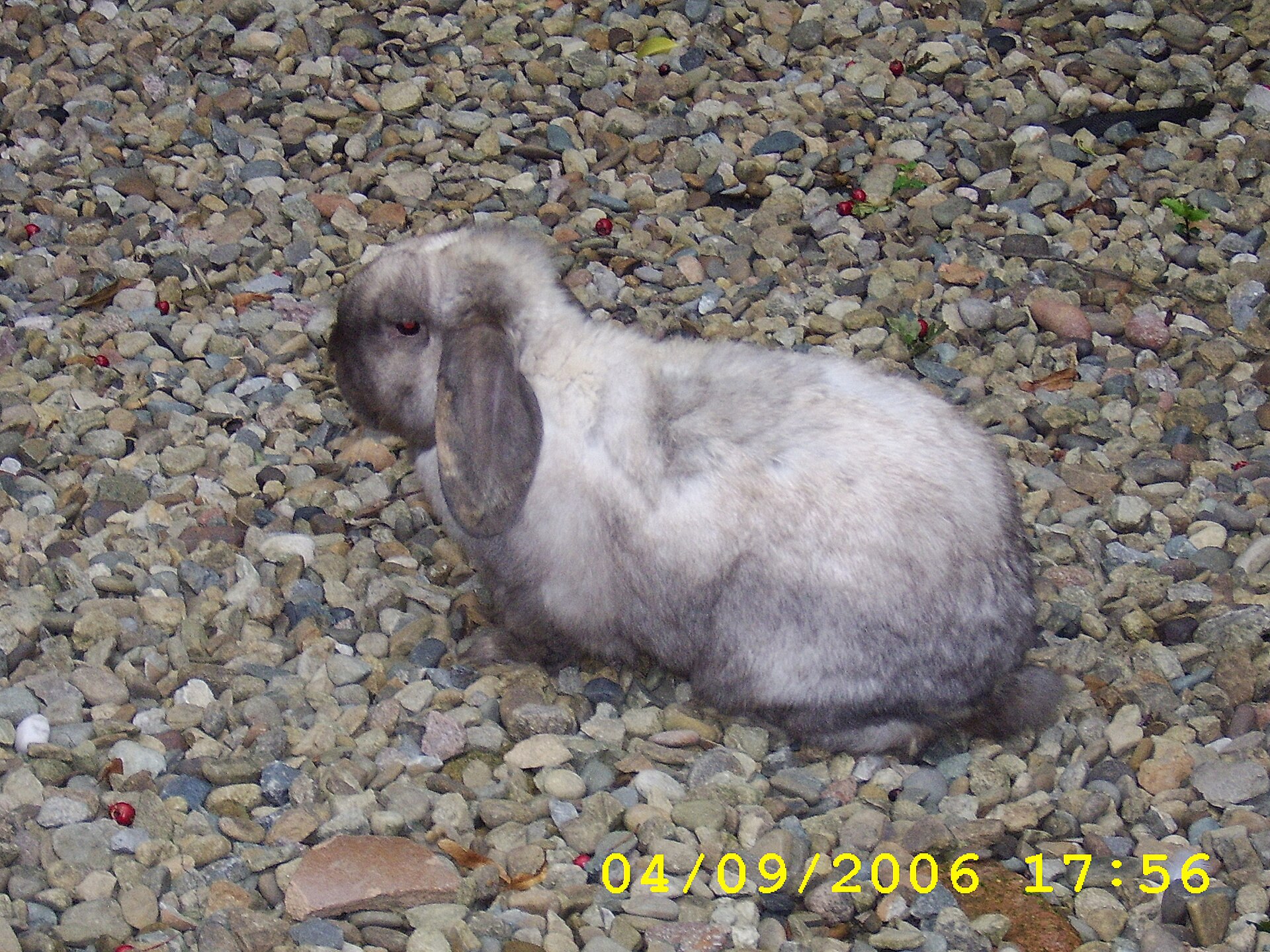
Photo: Tuckars / Wikimedia Commons (public domain) - a pet rabbit. Airlines routinely classify rabbits as exotic animals rather than standard pets, which changes the entire import process.
Exporting a pet from Laos
The same DLF office handles the outbound side, and the requirements mirror the inbound process with a couple of Laos-specific additions:
- A Rabies Titre blood test, lab-issued and vet-signed, confirming your pet's rabies antibody levels
- Full vaccination and microchip records
- A Health Certificate countersigned by the Lao government
- An Export Permit from DLF, submitted at least 15 days before you plan to leave
- Your destination country's own import permit, arranged in parallel since Laos won't be the one issuing that
If you're leaving with an exotic pet, the same logic from the import side applies in reverse: check your destination country's rules and your airline's species policy well before you assume a straightforward flight is available.
Getting help: who to actually call
For dogs and cats, Animal Doctors International in Vientiane is a commonly recommended veterinary clinic for import/export paperwork and health checks.
For the logistics side - and this is the recommendation worth taking seriously if you don't want to run the DLF process yourself - Vientiane Dog Paradise is generally considered the strongest option in the country for pet import and export handling. They're Vientiane's original dedicated pet centre, and beyond boarding and training, they've actually executed real international relocations (their own posted case studies include pets successfully relocated as far as South Africa). If you want someone who already knows the DLF paperwork, the airline coordination, and the realistic timelines rather than learning it yourself from scratch, they're the name most worth starting with:
- Phone: 030 50 95 964
- Email: vientianedogparadise@gmail.com
- Facebook: facebook.com/vientianedogparadise
A few common questions
Will my pet be quarantined when it arrives in Laos?
Not if your paperwork is complete and correct - Laos doesn't impose routine quarantine on compliant pets. A pet that arrives without proper documentation can face quarantine (where space allows), be returned to its origin country, or worse, so this is not an area to cut corners on.
How far in advance should I start the import process?
4-6 months, minimum. Rabies vaccination timing windows, DLF permit processing, and often-inconsistent enforcement between officials all eat into your runway faster than expected.
Can I bring a rabbit, bird, or other non-dog-or-cat pet to Laos?
Yes, but expect a materially different process - air cargo freight rather than standard checked-pet travel, likely a multi-leg routing through a hub country like Thailand with its own import permit requirement, and a different vaccination profile specific to the species. Start researching your specific animal's requirements separately from generic "moving to Laos with a pet" guides, which are almost always written with dogs and cats in mind.
Do I need a company or agent to help with pet import, or can I do it myself?
You can do it yourself - the DLF process is documented and not exotic. Most people who've been through it, though, say a local pet relocation specialist like Vientiane Dog Paradise saves real time and stress, particularly for anything beyond a straightforward dog or cat import.
Already have your pet settled in Laos? Browse pet-related listings on ul.la for supplies, boarding, and more.